DPD Lost Your Parcel? How to Get a Refund (UK Guide)
Not sure who owes you a refund? Free check, no signup.
Published
Updated
Quick Answer
If DPD has lost a parcel from a retailer order, contact the retailer first. Under Section 29 of the Consumer Rights Act 2015, the retailer normally carries the delivery risk until the goods reach your possession. DPD says only its contract holder can register the carrier claim.
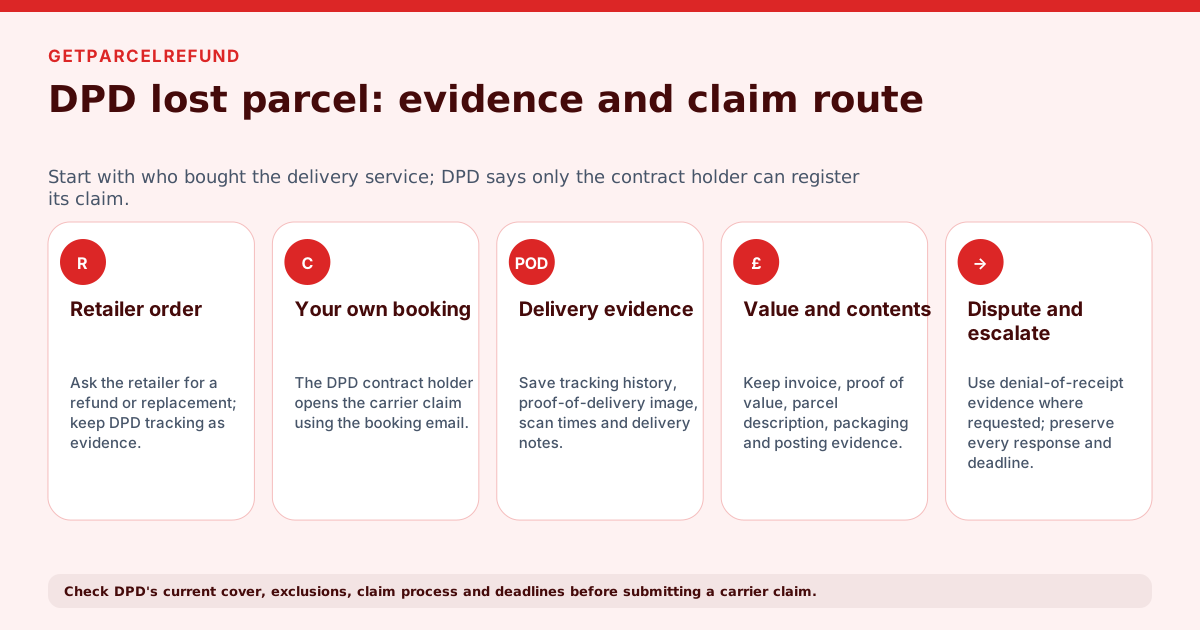
The route distinguishes a retailer-arranged delivery from a DPD service booked directly, then lists the evidence, remedy and escalation path for each.
DPD Lost Parcel, Who Is Actually Responsible?
DPD is the UK's second-largest courier, used by major retailers including John Lewis, Marks & Spencer, Next, and many others. When DPD loses a parcel, most people assume they need to chase DPD to get their money back. That assumption costs people days of frustration and, in many cases, gets them nowhere. Your real protection sits elsewhere, with the retailer you ordered from, under your delivery rights under the Consumer Rights Act 2015. Under Section 29 of that Act, the retailer stays responsible for your goods until they are delivered into your physical possession. It does not matter which courier they used or what happened in transit. The retailer is the party that needs to fix it.
Why the Contract Holder Normally Makes the DPD Claim
DPD says only the contract holder can register a claim. For a retailer-arranged delivery, that is normally the retailer or fulfilment business that booked DPD, so your consumer remedy is usually against the retailer. If you bought the DPD service yourself, you may be the contract holder and can follow DPD's own claim route. Check the booking confirmation before choosing the route.
Why DPD's Carrier Cover Does Not Limit the Retailer's Duty to You
DPD's current cover limits and exclusions govern the contract holder's carrier claim. They do not replace the retailer's duties to you. For a retailer-arranged delivery that never reaches your possession, ask the retailer for the appropriate refund or replacement; the retailer can handle its separate DPD claim. Check DPD's current terms if you booked the service yourself. It is the same principle that applies when a parcel is marked as delivered but never actually received.
What DPD Tracking Shows When a Parcel Is Lost
DPD's tracking system is generally more detailed than most couriers, which makes it useful evidence. Common statuses to look out for include 'parcel not found', 'returned to sender', 'delivery attempted' with no further update, or 'delivered' with a photo that does not match your property. Screenshot everything, the tracking history, the timestamp, the stated delivery location, and any delivery photo. If the photo shows the wrong doorstep or a street sign you do not recognise, that is strong evidence the parcel was misdelivered. If there is no photo at all when DPD usually provides one, note that too.
How to get your money back
- Check the DPD tracking page and screenshot all available details, delivery status, timestamps, any photo, and the stated delivery location.
- Note whether DPD shows 'delivered', 'lost', 'returned to sender', or something else. Each status affects how you frame the complaint.
- Contact the retailer in writing. Email or the retailer's help centre message system both work. Explain clearly that DPD has not delivered your parcel and that you have not received it.
- Reference Section 29 of the Consumer Rights Act 2015 and ask for a specific outcome: a full refund or a replacement.
- Give the retailer a reasonable written response date. This keeps the complaint moving and gives you a clear record if you need to escalate.
- If the retailer refuses or delays beyond your deadline, escalate through your payment method. Section 75 applies if you paid by credit card and a single item cost over £100. Chargeback may apply to debit card payments. PayPal Buyer Protection is another option if relevant.
Template: Complaint Email to Retailer About DPD
Subject: Missing Delivery, Order your order reference Dear Customer Service, I am writing about order your order reference placed on your order date, with a total value of the order value. DPD tracking shows the last known status. I have not received the parcel and have checked thoroughly at my address. Under Section 29 of the Consumer Rights Act 2015, you remain responsible for delivery until the goods reach me. DPD is your chosen courier, and their failure to deliver correctly is your responsibility to resolve. I attach / include screenshots of the DPD tracking for reference. Please confirm within 7 working days whether you will issue a full refund of the order value or send a replacement. Yours sincerely, [Your Name] [Order Reference]
Common DPD Scenarios and How to Handle Them
DPD lost parcels tend to fall into a few patterns. If DPD shows 'delivered' but you received nothing, this is a false delivery scan, one of the most reported issues on consumer forums. Screenshot the tracking and go straight to the retailer. If DPD left the parcel in a 'safe place' you did not agree to, such as a bin store, behind a gate, or in a communal hallway, the retailer is still responsible because DPD chose the location without your instruction. If tracking shows a different address in the delivery photo, that is a misdelivery, clear evidence for your complaint. If the tracking has simply stopped updating for several days, give it one extra working day for delays, then treat it as a lost parcel and contact the retailer. If you have already tried once and the retailer is pushing back, see the guidance on what to do when a retailer tells you to contact the courier instead. If the DPD photo shows a doorstep or safe place and the parcel was stolen, use the DPD doorstep-theft action flow. For the broader courier route, use the DPD lost parcel refund route.
What If the Retailer Says It Is DPD's Problem?
Some retailers will try to deflect by saying the parcel is in DPD's hands and you should take it up with them. This is a common response, but it does not change your legal position. Your contract is with the retailer, and Section 29 of the Consumer Rights Act 2015 makes the retailer responsible until the goods reach you. Reply firmly, keep everything in writing, and repeat your request for a refund or replacement. If the retailer still refuses after a second attempt, escalate through your payment method or raise a complaint with Citizens Advice. Drafting those escalation letters in the right way and packaging your evidence correctly is where many people get stuck, if you would rather not handle it yourself, Parcel Refund can manage the dispute on your behalf on a pay-per-case basis.
When Is It Worth Contacting DPD Directly?
There is one situation where contacting DPD can help: gathering evidence. DPD's customer support may be able to give you a more detailed delivery log, GPS data, or a higher-resolution delivery photo than what appears in the tracking app. That information can strengthen your complaint to the retailer. However, contacting DPD for evidence is different from expecting DPD to resolve the dispute. Do not wait for DPD to complete an internal investigation before contacting the retailer, that investigation can take weeks, and the retailer can act much faster.
Real Examples: How DPD Lost Parcel Claims Play Out
Understanding how these disputes resolve in practice helps set expectations. Example 1: A customer ordered a £180 jacket from an online retailer. DPD tracking showed 'delivered' with a photo of a doorstep that was clearly not theirs, different door colour, different house number visible. The customer emailed the retailer with screenshots, cited Section 29, and received a full refund within 4 working days. Example 2: A customer's DPD tracking stopped updating after 'arrived at local depot' for 8 days. The retailer initially said to wait for DPD's investigation. The customer replied in writing, set a 7-day deadline, and referenced the Consumer Rights Act. The retailer issued a replacement on day 5 without waiting for DPD. Example 3: A customer paid £320 for electronics. DPD showed 'delivered to safe place, rear porch'. The customer had no rear porch. The retailer tried to argue DPD confirmed delivery, but the customer's photos of the property showing no rear porch settled it. Full refund issued after one escalation email. These are typical outcomes when consumers know their rights and keep complaints in writing with clear evidence.
Your Legal Position in Detail: Consumer Rights Act 2015
Section 29 of the Consumer Rights Act 2015 is the core legal provision for delivery disputes. It states that goods remain at the trader's risk until they come into the physical possession of the consumer, or a person identified by the consumer to take possession. This means the retailer bears the risk of loss, damage, or misdelivery during transit, regardless of which courier they chose. Section 28 reinforces this by requiring delivery within the agreed timeframe or, if none was agreed, without undue delay and within 30 days of the day the contract was made. If the retailer misses an essential date or refuses to deliver, the consumer can end the contract immediately; otherwise the consumer sets a further appropriate period in writing and can end the contract if that passes too, with a refund of everything paid. Importantly, neither section can be contracted out of. If a retailer's terms and conditions say 'we are not responsible once the parcel leaves our warehouse', that clause is unenforceable under the Consumer Rights Act. The retailer may not know this, which is why quoting the specific sections in your complaint email tends to get faster results. For credit card purchases where a single item cost over £100, Section 75 of the Consumer Credit Act 1974 provides an additional route. The card issuer is jointly liable with the retailer, meaning you can claim your refund from the card company if the retailer refuses to act. For debit card payments, chargeback is not a statutory right but a scheme rule operated by Visa and Mastercard, most banks will process a chargeback for non-delivery if you provide evidence that the retailer has failed to resolve it.
What If You Sent Something via DPD Yourself?
If you booked and paid for the DPD service yourself, check the booking confirmation: you may be the contract holder who can open the DPD claim. DPD asks for the booking email and supporting evidence such as proof of value and proof of delivery or a denial-of-receipt form, while its current exclusions and cover limits still apply. Check DPD's current terms and claim instructions before submitting. A retailer-provided return label is a different arrangement, so keep the label and proof of handover and contact the retailer about the return.
Escalation timeline
Day 1: Parcel not arrived or tracking looks wrong. Screenshot all DPD tracking details immediately. Day 1-2: Check around your property, ask neighbours, and confirm you have not received the parcel. Day 2-3: Send your first written complaint to the retailer. Include tracking screenshots, reference Section 29, and request a refund or replacement within 7 working days. Day 10: If no response or an unsatisfactory response, send a follow-up email restating your position and noting the missed deadline. Day 14: If the retailer still refuses, escalate through your payment provider. For credit cards where a single item cost over £100, file a Section 75 claim. For debit cards, request a chargeback. For PayPal, open a buyer protection dispute. Day 30+: If all routes fail, Citizens Advice can refer the retailer to Trading Standards, which does not resolve individual disputes, so also consider a claim through the Small Claims Court (Money Claims Online) for amounts up to £10,000. Court fees start from £35 and most retailers settle before a hearing.
For courier-specific help, compare Royal Mail, Evri, Yodel and DPD guidance. If your case is a lost parcel, marked delivered, damaged parcel or doorstep theft issue, use the matching scenario page to generate the next steps for your case.
Frequently Asked Questions
Can I claim compensation directly from DPD as a customer?+
Only if you are DPD's contract holder. For a retailer-arranged order, the retailer or fulfilment business normally booked the service, so contact the retailer for the consumer remedy. If you booked DPD yourself, check your booking email and DPD's current claim instructions.
How long does a DPD lost parcel investigation take?+
DPD's internal investigation can take several weeks. That is why it is usually faster to claim from the retailer directly rather than waiting for DPD to conclude their investigation. The retailer can issue a refund or replacement without waiting for DPD.
DPD tracking says delivered but I never received it, what should I do?+
Screenshot the tracking status and any delivery photo. Check around your property in case it was left nearby, then contact the retailer straight away. Explain the discrepancy between DPD's scan and your experience. This is a false delivery scan and the retailer is responsible for resolving it.
Does DPD's carrier cover limit what the retailer owes me?+
No. DPD's current cover and exclusions govern the contract holder's separate carrier claim. They do not replace the retailer's consumer-law duties where the retailer arranged delivery and the goods never reached your possession.
What if DPD delivered my parcel to the wrong address?+
A misdelivery is strong evidence for your complaint. Screenshot the DPD tracking showing the delivery location, especially if the delivery photo shows a different address. Report this to the retailer and ask for a refund or replacement. The retailer is responsible for ensuring DPD delivered correctly.
How long do I have to make a claim for a DPD lost parcel?+
You generally have up to 6 years from the breach under the Limitation Act 1980 to claim from the retailer, but act quickly in practice. DPD's own terms require the sender to notify DPD of loss or damage within 14 days of despatch, unless it could not reasonably have been done sooner, in which case a notice within a reasonable time still counts, so the retailer's claim against DPD can lapse long before your rights against the retailer do. Most retailers become less responsive after 30 days. Contact the retailer as soon as you realise the parcel is missing or lost, do not wait for DPD to close their investigation.
Can the retailer's terms and conditions override my rights under the Consumer Rights Act?+
No. Sections 28 and 29 of the Consumer Rights Act 2015 cannot be contracted out of. If a retailer's terms say they are not responsible after dispatch, that clause is unenforceable. Your statutory rights always apply regardless of what the retailer's website says.
What evidence do I need to support a DPD lost parcel claim?+
Screenshot the full DPD tracking history, including any delivery photo, timestamps, and the stated delivery location. If the delivery photo shows the wrong property, save that too. Keep copies of all emails to and from the retailer. If you escalate via your bank, they will usually ask for this evidence to process your claim.
Can I use Small Claims Court if the retailer and my bank both refuse?+
Yes. You can file a claim through Money Claims Online for orders up to £10,000. Court fees start from £35 depending on the claim value. In practice, most retailers settle once they receive the court paperwork rather than attend a hearing. You do not need a solicitor for Small Claims Court.
